ถ้าข้าม 2 ขั้นตอนนี้ไป เราจะไม่สามารถใช้งาน function ได้
เช่น เรียกใช้ sample_n() เพื่อสุ่มข้อมูลจาก data frame (ตารางข้อมูล):
# Data frame of my friends
friends <- data.frame(
  name = c("Alice", "Bob", "Charlie", "David", "Eve", "Frank", "Grace", "Heidi"),
  age = c(28, 32, 25, 30, 29, 35, 27, 31)
)

# friends data frame:
#       name age
#  1   Alice  28
#  2     Bob  32
#  3 Charlie  25
#  4   David  30
#  5     Eve  29
#  6   Frank  35
#  7   Grace  27
#  8   Heidi  31

# Sample 3 of my friends
sample_n(friends, 3)
ผลลัพธ์:
Error in sample_n(friends, 3) : could not find function "sample_n"
จะเห็นได้ว่า R ส่ง error กลับมา ซึ่งเราแก้ได้โดยติดตั้งและโหลด package ก่อนเรียกใช้งาน sample_n():
💪 ผมขอแนะนำ R Book for Psychologists หนังสือสอนใช้ภาษา R เพื่อการวิเคราะห์ข้อมูลทางจิตวิทยา ที่เขียนมาเพื่อนักจิตวิทยาที่ไม่เคยมีประสบการณ์เขียน code มาก่อน
ในหนังสือ เราจะปูพื้นฐานภาษา R และพาไปดูวิธีวิเคราะห์สถิติที่ใช้บ่อยกัน เช่น:
Correlation
t-tests
ANOVA
Reliability
Factor analysis
🚀 เมื่ออ่านและทำตามตัวอย่างใน R Book for Psychologists ทุกคนจะไม่ต้องพึง SPSS และ Excel ในการทำงานอีกต่อไป และสามารถวิเคราะห์ข้อมูลด้วยตัวเองได้ด้วยความมั่นใจ
Two percent of the people think; three percent of the people think they think; and ninety-five percent of the people would rather die than think. — George Bernard Shaw
If you don’t know what you want, you will be told what you want, and you will believe it. If you don’t create a purpose, you will be assigned one. — Dan Koe
Customers are still going to want low prices. They are still going to want fast delivery. And they are still going to want a big selection. — Jeff Bezos
.
Note:
ใน quote จะเห็นว่า Jeff Bezos ไม่ได้พูดถึง quality แต่เป็น selection แทน
การที่ AI พัฒนาเร็วขึ้นเรื่อย ๆ ทำให้เรามีเวลาปรับตัวน้อยลงเรื่อย ๆ
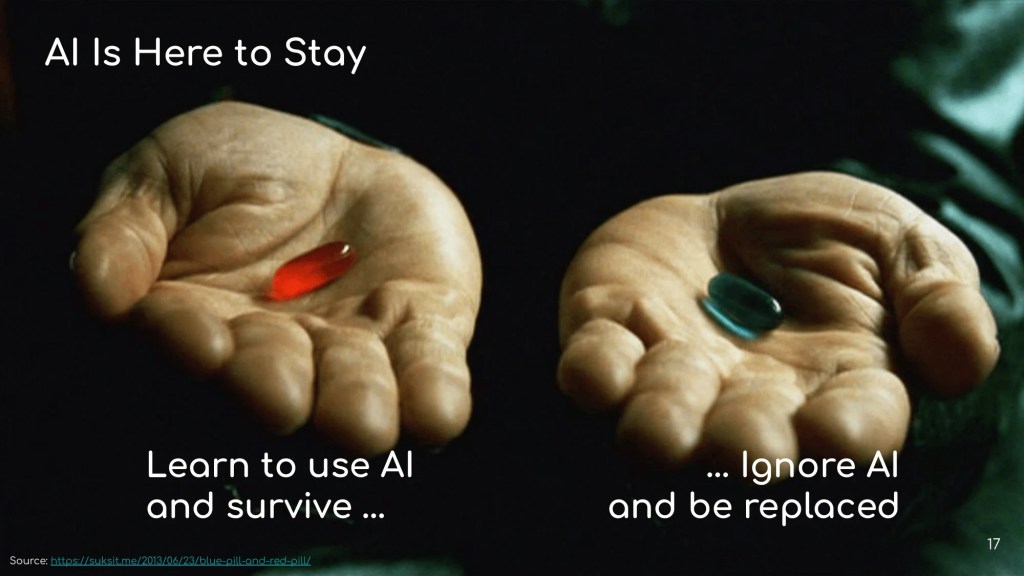
และตอนนี้ เราเหมือนอยู่ที่ทางแยกที่เราจะต้องเลือกว่า เราจะเรียนรู้การใช้ AI ให้เป็นและอยู่รอดในยุคของ AI หรือเราจะใช้ AI แบบเดิม ๆ และถูกทิ้งไว้ข้างหลัง
The people who will come out of this well won’t be the ones who mastered one tool. They’ll be the ones who got comfortable with the pace of change itself. — Matt Shumer
💼 Part II. Working With AI
.
ข้อ 9. Maslow’s hammer
I suppose it is tempting, if the only tool you have is a hammer, to treat everything as if it were a nail. — Abraham Maslow
Maslow’s hammer เป็น mental model ที่บอกว่า เครื่องมือสามารถจำกัดมุมมองของเราได้
เช่น ถ้าเรามีค้อน เราจะมองทุกอย่างเป็นตะปู
ในยุคของ AI เราอาจมองว่าทุกอย่างแก้ได้ด้วย AI:
ทำงานเร็วขึ้น
ผิดพลาดน้อยลง
มีเวลามากขึ้น
แต่ไม่ใช่ทุกปัญหาจะแก้ได้ด้วย AI เพราะ AI ไม่ใช่เครื่องมือสำหรับแก้ทุกอย่าง
ถ้าเราอยากตอกตะปู เราจะต้องใช้ค้อน ไม่ใช่ AI
การใช้ AI ที่ถูกต้อง คือ เริ่มต้นจากปัญหาและความต้องการของเรา แล้วเลือกเครื่องมือที่ตอบโจทย์ ซึ่งเครื่องมือนั้นอาจจะเป็น AI หรือไม่ก็ได้
.
ข้อ 10. AI is built in man’s image
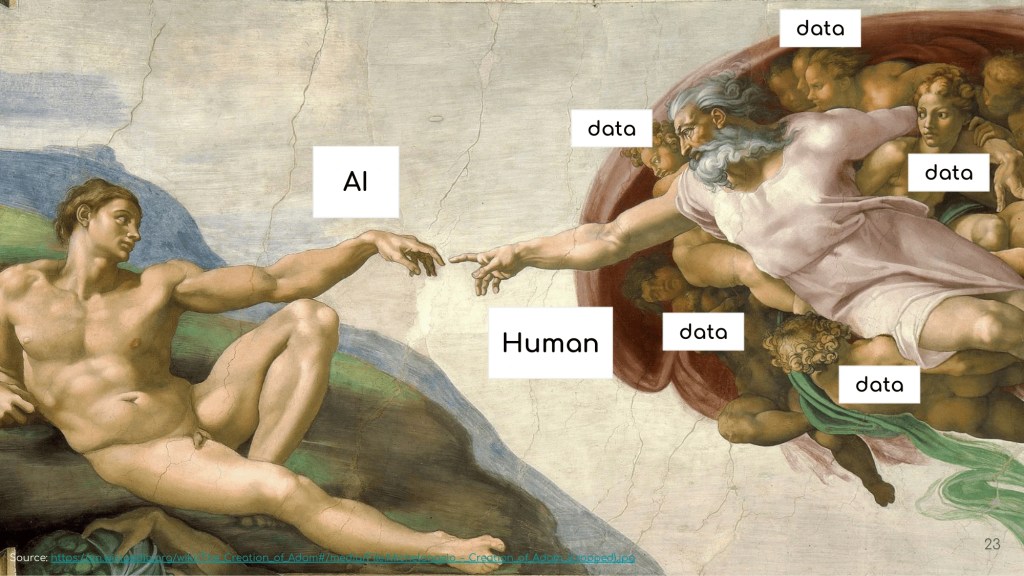
AI เกิดจากการ train model ด้วยข้อมูลจากอินเทอร์เน็ตซึ่งมาจากมนุษย์
Human -> Data -> Train -> AI
เพราะ AI ถูกสร้างจากข้อมูลของมนุษย์ และเรามองได้ว่า AI เป็นเหมือนเป็นมนุษย์คนหนึ่ง
.
ข้อ 11. AI as capable but junior assistant
ถ้าเรามอง AI เป็นคน AI จะเป็นเหมือนผู้ช่วยที่มีความรู้รอบด้านและมีศักยภาพสูง
แต่สิ่งเดียวที่ผู้ช่วยคนนี้ยังขาดไป คือ ทิศทาง
.
ข้อ 12. Even a fried egg is hard to get right
การทำงานกับ AI ก็เหมือนสั่งไข่ดาว แม้จะดูง่าย แต่ก็ไม่ง่ายอย่างที่คิด
บางครั้ง เราอยากกินไข่ไม่สุก แต่ได้แบบสุกมาแทน
บางครั้ง เราอยากให้ AI สร้างรูปในแบบที่เราคิด แต่ไม่เคยได้ภาพนั้นสักที
ถ้าสิ่งที่ AI ส่งกลับมาไม่ตรงใจ เราควรจะบอก AI ว่าอะไรที่ยังไม่ถูกใจ เพื่อให้ AI ปรับผลลัพธ์และส่งกลับมาให้เราเช็กจนกว่าเราจะพอใจกับงานของ AI
.
ข้อ 16. Be accountable
เราควรจะเช็กงานของ AI ทุกครั้ง เพราะถ้าเราไม่รับผิดชอบกับงานของ AI เราอาจจะเป็นเหมือนทนายความจากออสเตรเลียที่ถูกตรวจสอบ หลังจากศาลพบว่าเอกสารที่ทนายนำส่งเป็นข้อมูลที่ไม่มีอยู่จริง
แม้ทนายจะอ้างว่ารู้เท่าไม่ถึงการณ์ว่า AI ที่บริษัทให้ใช้สามารถสร้างข้อมูลที่ไม่มีอยู่จริงได้ และตัวเองควรตรวจสอบข้อมูลจาก AI ก่อน ศาลยังสั่งให้ทนายงดว่าความด้วยตัวเองเป็นเวลา 2 ปี โดยในระยะเวลานี้จะต้องทำงานเป็นลูกจ้างของคนอื่น และต้องรายงานต่อศาลทุกไตรมาส
ดังนั้น ไม่ว่างานของ AI จะดูดีขนาดไหน เราควรจะตรวจสอบด้วยตัวเองก่อนที่จะนำงานไปใช้จริง
# Set the query
brazil_customers_query = """
SELECT FirstName, LastName, Phone, Email
FROM Customer
WHERE Country = 'Brazil';
"""

# Query the database
df = pd.read_sql(brazil_customers_query, engine)

# Display the df
print(df)
# Set system prompt
system_prompt = """
You are a helpful, cheerful, and optimistic assistant.

Be concise, validate answers, and admit when you don’t know.

Make responses clear, easy to read, and sprinkle in playful emoji.
"""

# Instantiate chat history
chat_history = [
    {
        "role": "system",
        "content": system_prompt
    }
]
📨 Step 4. Create a Chat Function
ในขั้นที่ 4 เราจะสร้าง function ที่จะทำให้เราถาม-ตอบกับ chatbot แบบ real-time ได้:
# Create a function for chatbot
def chatbot(model="gemini-2.5-flash"):
# Set chat history as global variable
global chat_history
# Print chat header
display(Markdown("# 🟢 --- Chat Begins ---"))
# Print chat instruction
print("ℹ️ Type \\"end chat\\" to exit.")
# Loop through conversation
while True:
# Render user prompt display
display(Markdown("## 🧑💻 You:"))
# Get user input
user_prompt = input("")
# Check if user wants to exit chat
if user_prompt.lower() == "end chat":
# Print goodbye message
display(Markdown("## ✨ Assistant:\\n" + "👋 See you later!"))
# End chat
break
# Append user input to chat history
chat_history.append(
{
"role": "user",
"content": user_prompt
}
)
# Get response
response = client.chat.completions.create(
# Set prompt
messages=chat_history,
# Set model
model=model
)
# Append response to history
chat_history.append(
{
"role": "assistant",
"content": response.choices[0].message.content
}
)
# Render response
display(Markdown("## ✨ Assistant:\\n" + response.choices[0].message.content + "\\n"))
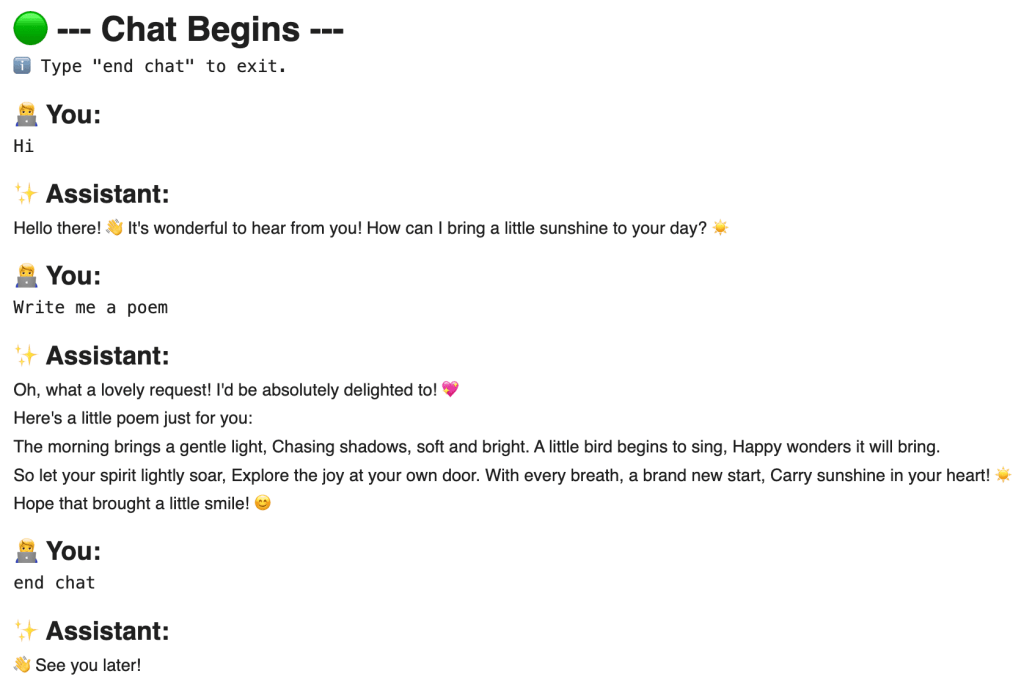
💬 Step 5. Chat
ในขั้นสุดท้าย เราจะเรียกใช้งาน chatbot() เพื่อเริ่มคุยกับ AI เลย:
Rational Buddhism, to me, means understanding the internal work Buddhism espouses to make yourself happier, better off, more present and in control of your emotions—being a better human being.

















 Shi no Shigoto